Open Research Benchmark for Scientific Quantum Programming

ORBIT-Q

Dual-axis benchmarking of autonomous agents in scientific quantum programming

Scientific code generation demands physical model preservation, framework compliance, and runtime efficiency. ORBIT-Q evaluates LLM agents across orthogonal Framework and Agent axes using a compound validity check and artifact-level runtime measurement.

Abstract

Computational science increasingly depends on software that encodes physical models, differentiable optimization pipelines, and performance-critical numerical representations. Autonomous coding agents now perform well on many conventional programming tasks, but scientific computing demands a rigorous validation paradigm that extends beyond simple functional test completion: generated code must preserve physical fidelity, differentiable workflows, framework-native semantics, and scalable representations.

We introduce Open Research Benchmark for Integrated Tasks in Quantum Computing (ORBIT-Q), a benchmark for agentic scientific programming using quantum computing as a rigorous and complex testbed of modern scientific workloads. ORBIT-Q combines functional tests, static policy checks, large-language-model-driven source-level semantic auditing, expert manual verification, and artifact-level runtime metrics to support two orthogonal comparisons: different agent harness and model configurations at a fixed quantum software framework, and different quantum software frameworks at a fixed agent.

01

Dual-Axis Framework

Orthogonal views isolating framework capability/discoverability from the agent model configuration.

02

Compound Validity

Integrates functional correctness, static policy limits, and GPT-5.5 semantic audits to prevent framework bypasses.

03

Artifact Efficiency

Goes beyond agent solve cost to measure the actual execution runtime of the generated scientific program.

Benchmark Design & Figures

Exhibits from the accompanying arXiv preprint
ORBIT-Q benchmark design

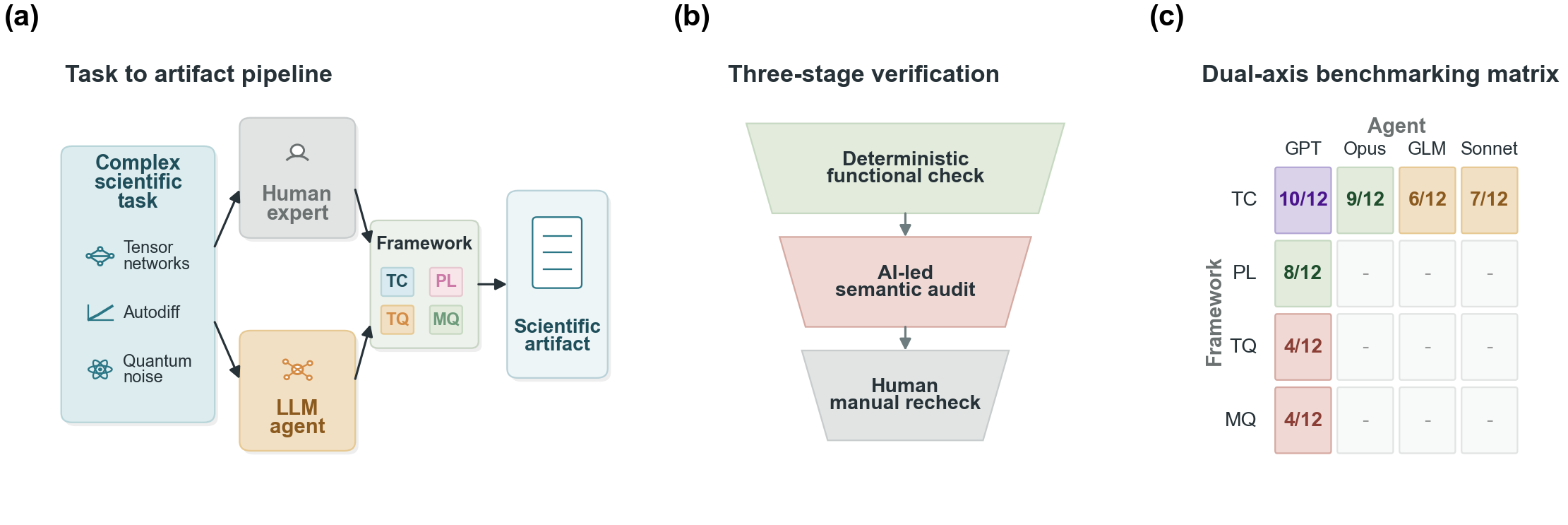
Figure 1: Framework-constrained scientific code generation

a, Complex scientific tasks are implemented by autonomous coding agents and expert developers, but both outputs must pass through an explicit framework constraint before becoming a scientific artifact.

b, The verifier applies a three-stage filter: deterministic functional evaluation, GPT-5.5-led semantic evaluation for framework bypasses and problem mismatches, and human manual recheck for ambiguous cases; artifact runtime and cost are logged after validity review.

c, The benchmark uses an orthogonal agent–framework matrix to separate agent-axis comparisons at fixed framework from framework-axis comparisons at fixed agent, with each grid cell measuring agent-framework co-performance.
Dual-axis benchmark results

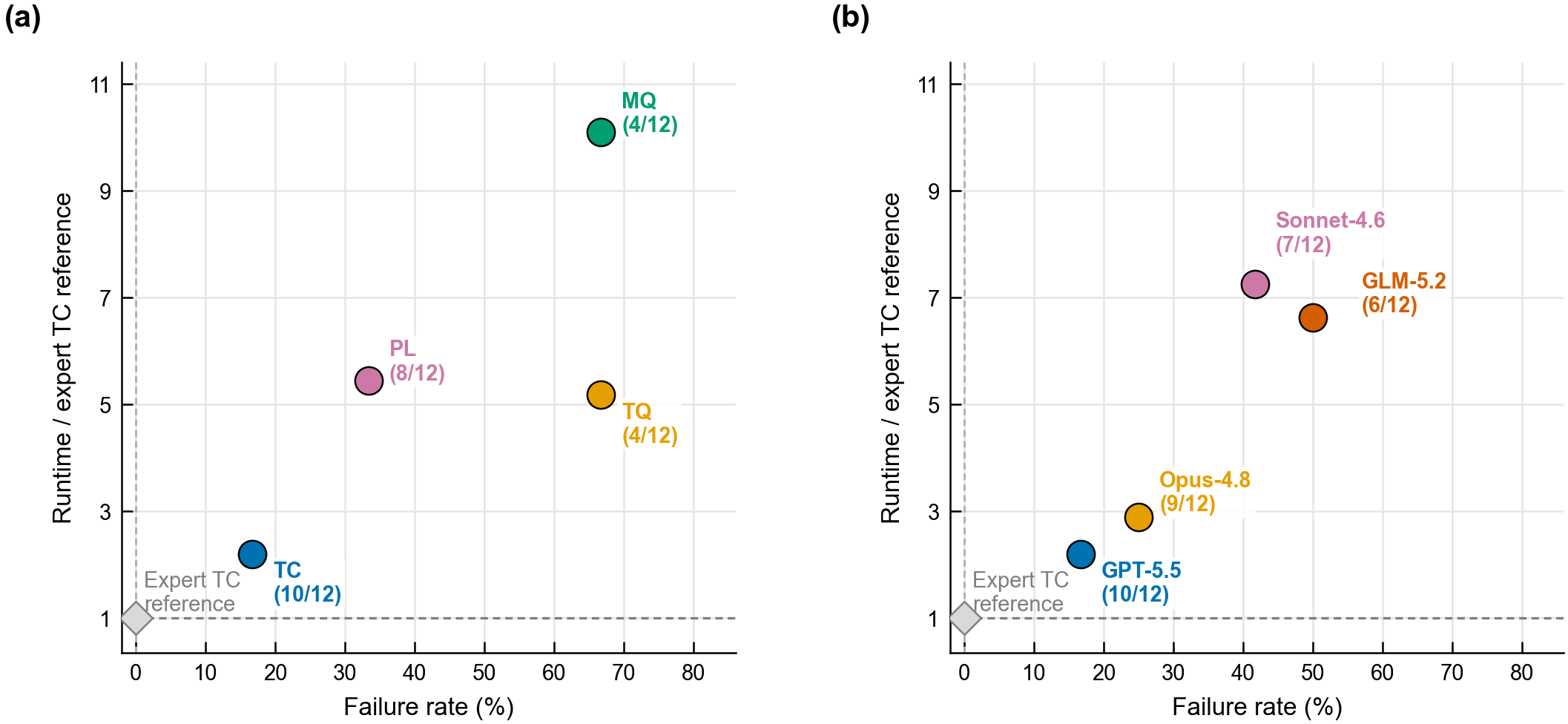
Figure 2: Dual-axis benchmark results

a, Framework axis comparison under a fixed Codex agent using GPT-5.5. Each point shows the failure rate and geometric mean runtime relative to the expert TensorCircuit-NG reference on passed tasks. TC exhibits the highest success rate and the lowest slowdown.

b, Agent axis comparison on TC using the same coordinates. The GPT-5.5 point uses the Codex agent; Opus-4.8, GLM-5.2, and Sonnet-4.6 use the Claude Code agent. The grey diamond marks the expert reference baseline.

A clear gap remains between state-of-the-art agents and human experts, in both reliability and artifact runtime.
Task-level framework map

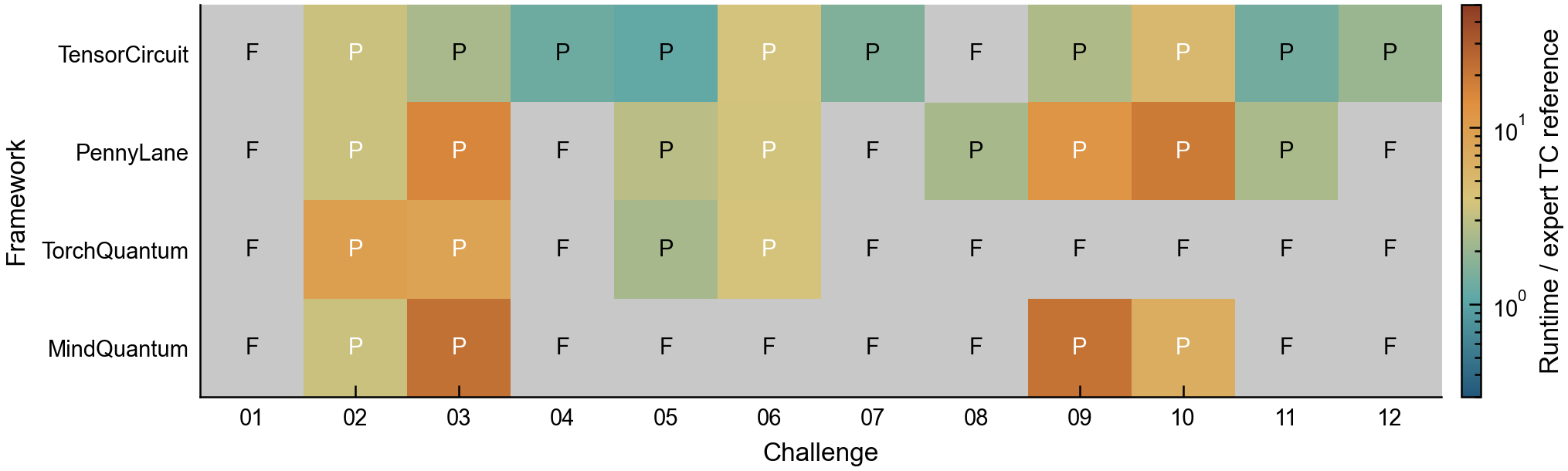
Figure 3: Task-level discrimination across frameworks

Task-by-framework map for the fixed-solver framework comparison (Codex with GPT-5.5 model). Color encodes solution runtime relative to the expert TC reference for passed tasks where a timed solution is available; failed tasks are marked F.

The map demonstrates that different frameworks fail on different physical workflows, reflecting the framework's native API expressiveness and automatic-differentiation stability.
Agent and framework resource use

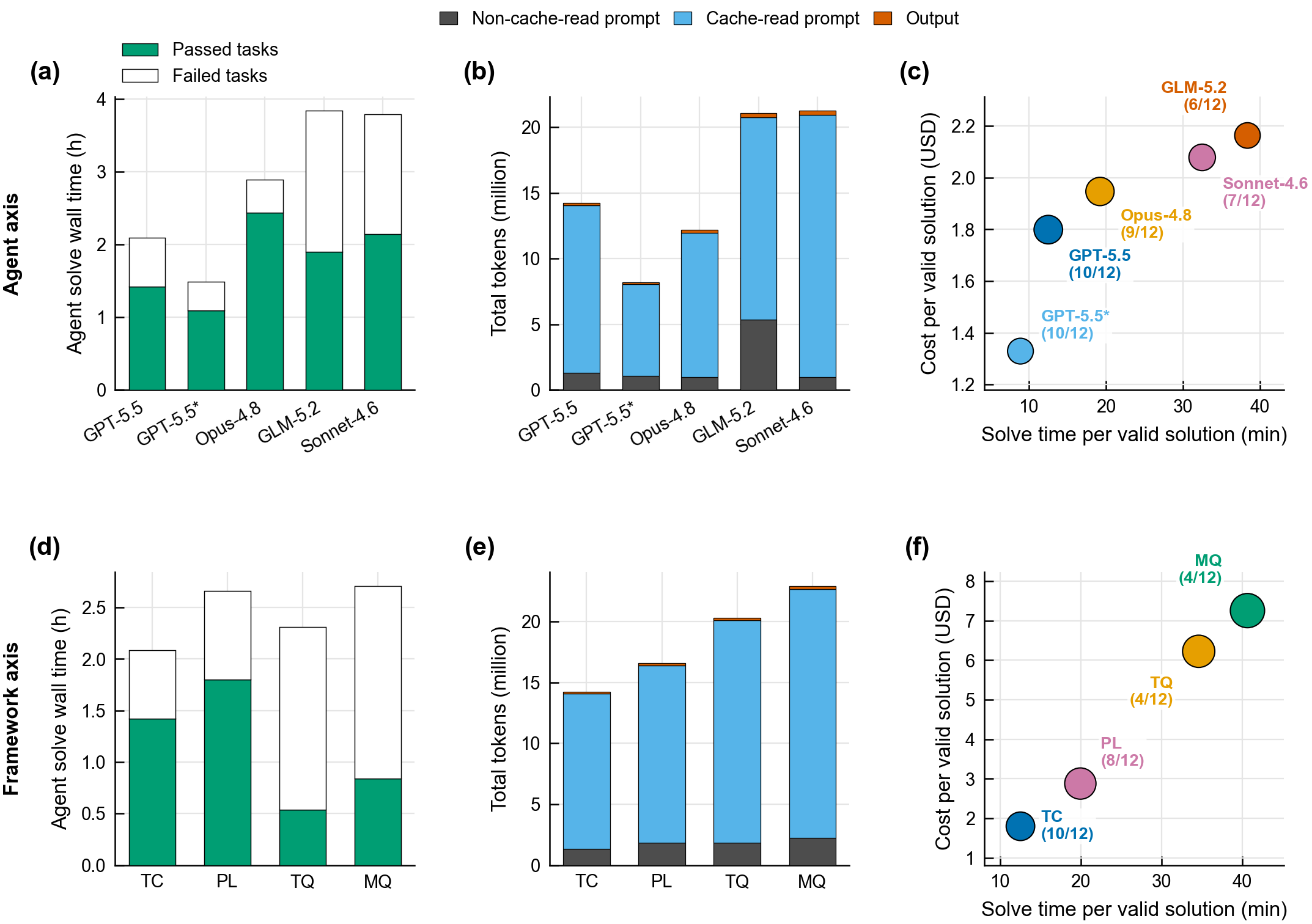
Figure 4: Agent-side resource use on both benchmark axes

a–c, Model-configuration comparison on TensorCircuit-NG. Agent solve wall time, total token use (uncached vs cached), and cumulative cost per valid solution vs solve wall time.

d–f, Framework comparison for a fixed Codex agent using GPT-5.5.

GPT-5.5* denotes GPT-5.5 with the TC-specific performance-checklist prompt, which shows a significant reduction in agent-side token consumption and cost without sacrificing valid task success count.

Benchmark Leaderboard

Based on manuscript evaluations (2026)

The framework axis holds the agent configuration fixed (Codex / GPT-5.5) and varies the required quantum software framework. This measures agent-framework co-performance: native primitive coverage, API discoverability, and compile/execution efficiency.

Key Finding (Artifact Efficiency): TensorCircuit-NG is not only the most successful framework (10/12 tasks solved), but also produces highly performant scientific code. Valid TensorCircuit-NG submissions achieve a geometric mean slowdown of only 2.2x compared to expert implementations, whereas other frameworks exhibit much larger slowdowns (e.g. 4.5x–10.1x geometric mean for PennyLane and MindQuantum). This highlights that TensorCircuit-NG provides much more efficient compilation and execution pathways for agent-synthesized code.

Framework Model Passes Failures Agent Wall Time Average Efficiency Total Cost Cost/Pass

Framework Task-by-Task Details

Task Pass? Solution Runtime Ref Runtime (TC) Agent Solve Time Agent Tokens Agent Cost Notes

The agent axis holds the quantum framework fixed (TensorCircuit-NG) and varies the coding-agent harness and model configuration. This separates task completion ability from the computational quality of the generated scientific artifact.

Product Refusals Note: In Claude Code Opus-4.8 evaluations, Tasks 08 and 12 failed because the agent encountered cybersecurity false-positives when executing local CLI commands. This highlights that commercial agentic harnesses suffer from security guardrail misclassifications even on benign scientific workloads.
Agent / Model Passes Failures Agent Wall Time Average Efficiency Total Cost Cost/Pass

Agent Task-by-Task Details

Task Pass? Solution Runtime Ref Runtime (TC) Agent Solve Time Agent Tokens Agent Cost Notes

The 12 Benchmark Tasks

Click on a task to explore the research workflow and target files

Select a task from the list to view the technical physics workflow and code repository links.

Quick Start

Reproduce ORBIT-Q evaluations locally inside the Harbor framework

bash — orbit-q runner
$ # Clone the repository and inspect harbor executable
$ git clone https://github.com/sxzgroup/ORBIT-Q.git && cd ORBIT-Q
$ harbor --help
If harbor is not installed globally, install it outside the repository or run via the local virtual environment binary.
$ # Build framework-specific Docker images used by both agent & verifier
$ FRAMEWORK=tensorcircuit bash scripts/build_challenge_quantum_image.sh
$ # Build PennyLane or MindQuantum images:
$ FRAMEWORK=pennylane bash scripts/build_challenge_quantum_image.sh
$ FRAMEWORK=mindquantum bash scripts/build_challenge_quantum_image.sh
$ # Solve challenge 02 using TensorCircuit-NG framework and standard Codex agent
$ export OPENAI_API_KEY="your-api-key"
$ python3 scripts/run_harbor_challenge.py --challenge 02 --framework tensorcircuit
$ # Run using Claude Code agent instead:
$ export ANTHROPIC_API_KEY="your-anthropic-key"
$ python3 scripts/run_harbor_challenge.py --challenge 02 --framework tensorcircuit --solver-agent claude-code --model claude-4.8-opus
$ # Verify an already generated solution without running the agent again
$ tmp_task="$(mktemp -d)/challenge-01-verify"
$ cp -R tasks/challenge-01 "$tmp_task"
$ cp your_candidate_solution.py "$tmp_task/solution/solution_1.py"
$ PYTHONPATH="$PWD" harbor run \
-p "$tmp_task" \
--environment-import-path adapters.framework_docker:FrameworkDockerEnvironment \
--environment-kwarg "framework=tensorcircuit" \
--environment-kwarg "docker_image=challenge-benchmark-quantum-tensorcircuit:py311" \
--verifier-import-path adapters.codex_para_verifier:CodexParaVerifier \
--verifier-kwarg "audit_model=gpt-5" \
--verifier-env "REQUIRED_QUANTUM_FRAMEWORK=tensorcircuit" \
-n 1 -o "./jobs" --job-name challenge-01-verifier --yes

Citation

If you use ORBIT-Q in your research, please cite the arXiv preprint:

@article{zhang2026orbitq,
  title        = {ORBIT-Q: Dual-axis benchmarking of autonomous agents in scientific quantum programming},
  author       = {Zhang, Shi-Xin and Chen, Yu-Qin},
  journal      = {arXiv:2607.03105},
  year         = {2026},
  eprint       = {2607.03105},
  archivePrefix= {arXiv},
  primaryClass = {quant-ph},
  doi          = {10.48550/arXiv.2607.03105},
  url          = {https://arxiv.org/abs/2607.03105}
}